Subscriptions
for good causes
A SaaS platform for animal shelters: recurring payments and donor transparency in one app


- 100%
- donated on the first try
- ~2 min
- on the animal page
- 13 → 4
- screens to donate
Problem. Shelters need sponsors for specific animals. Donors need proof their money arrived. Today it all happens in scattered chats and transfers, and no one sees the whole picture.
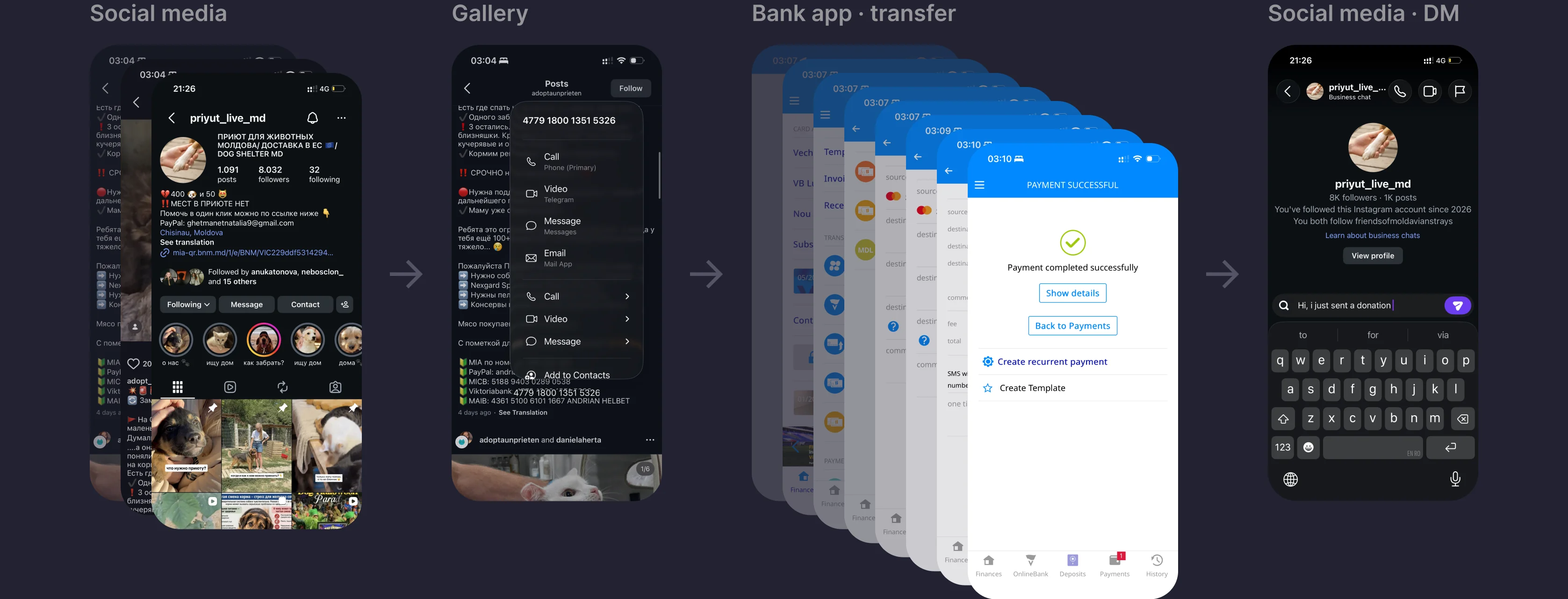
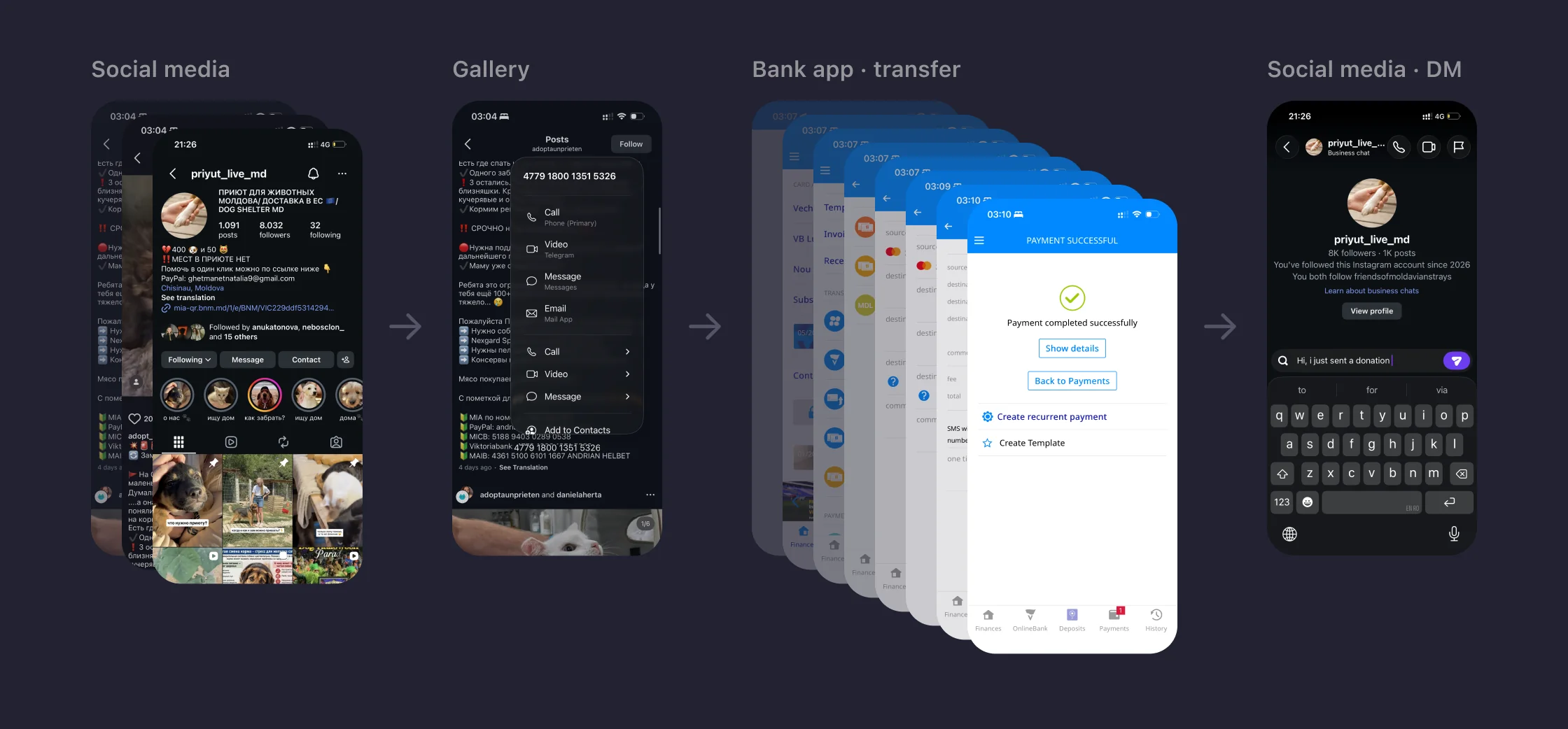
One donation takes 13 screens across 3 apps: social media, the phone gallery and the bank app. Then back to social media to DM “sent it” and hope for a reply.
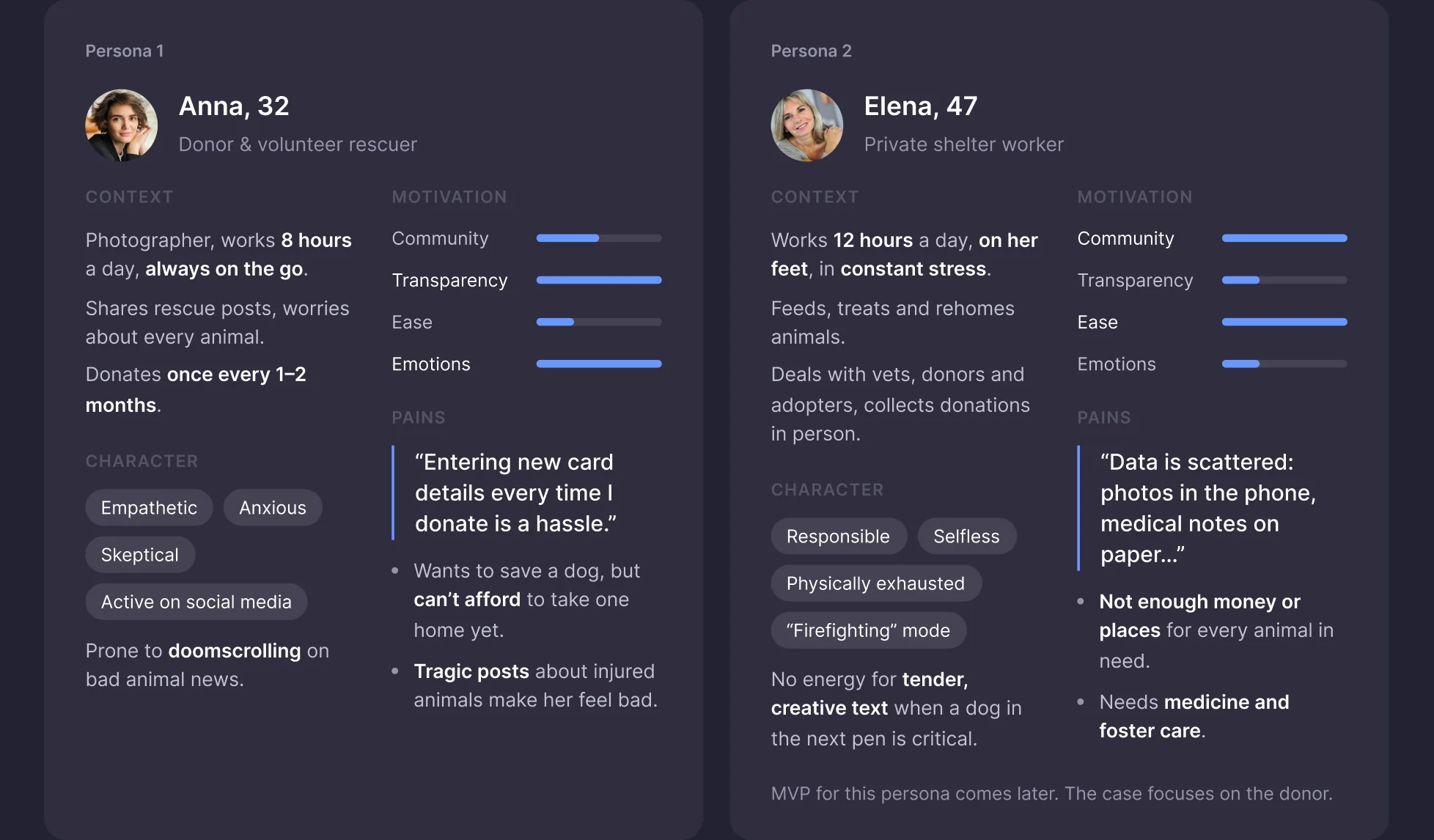
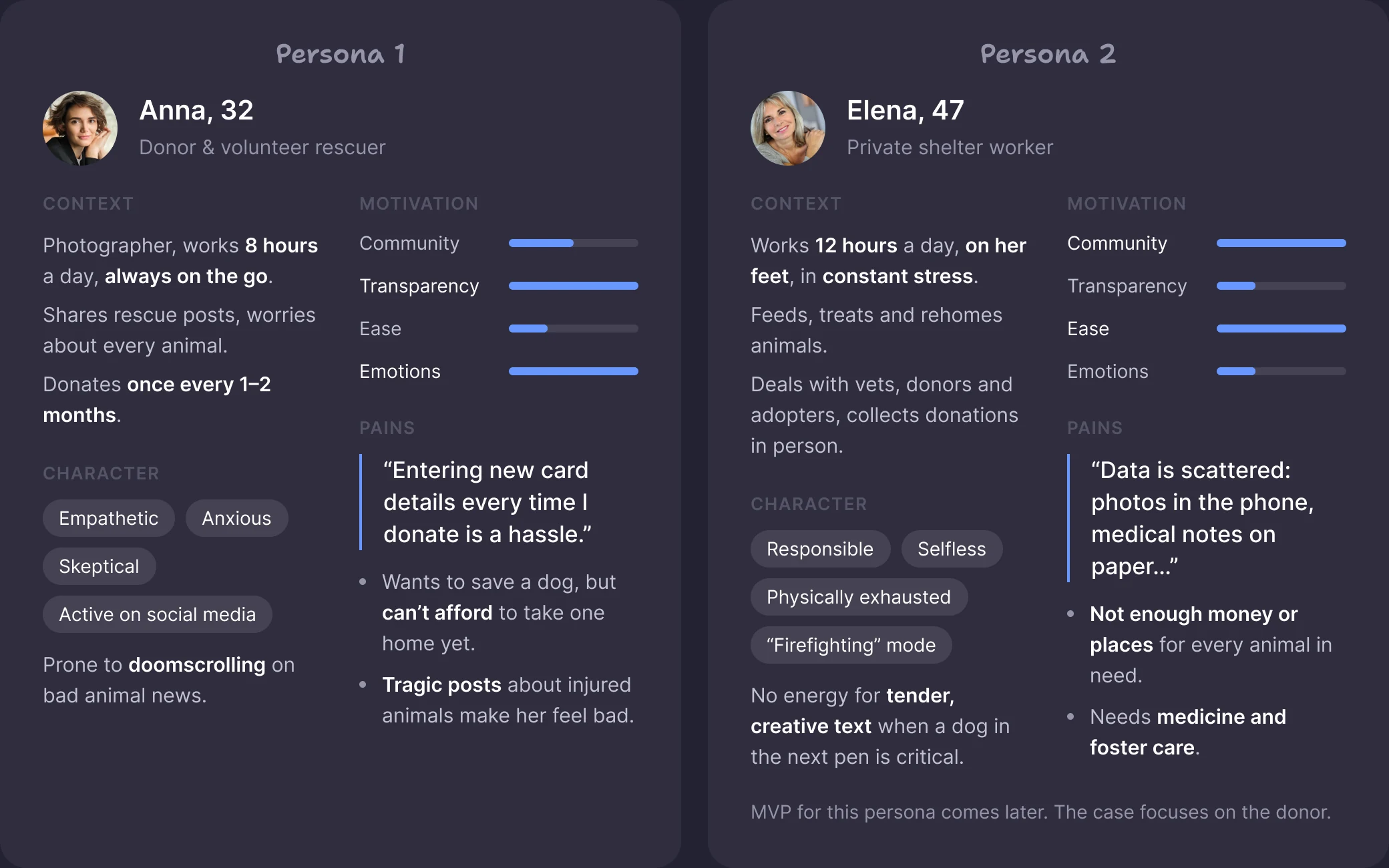
Personas. Two sides of one platform: the donor who needs proof, and the shelter that needs steady income.
Hypotheses. Before talking to anyone, I wrote down what I believed.
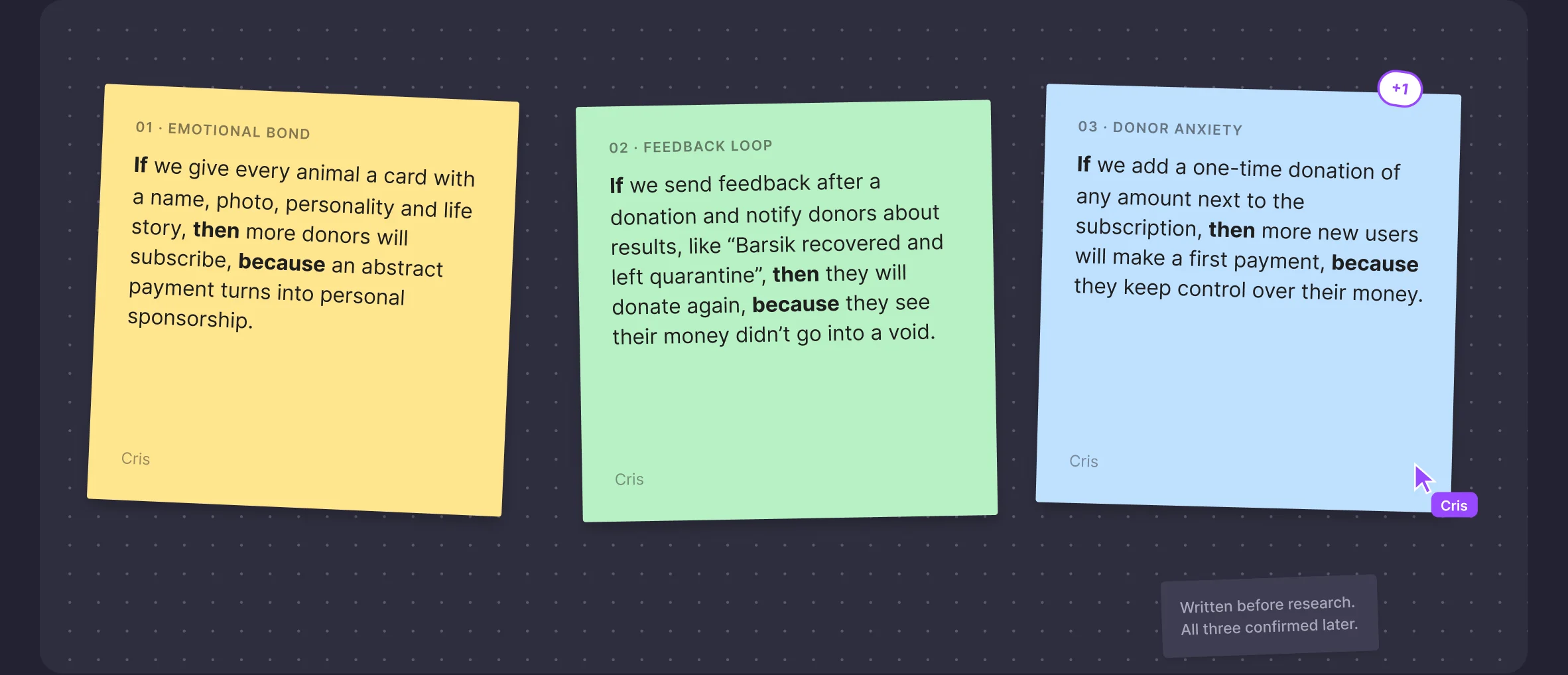
01 · EMOTIONAL BOND
If we give every animal a card with a name, photo, personality and life story, then more donors will subscribe, because an abstract payment turns into personal sponsorship.
Cris
02 · FEEDBACK LOOP
If we send feedback after a donation and notify donors about results, like “Barsik recovered and left quarantine”, then they will donate again, because they see their money didn’t go into a void.
Cris
03 · DONOR ANXIETY
If we add a one-time donation of any amount next to the subscription, then more new users will make a first payment, because they keep control over their money.
Cris
Written before research.
All three confirmed later.
Interviews. I talked to donors, volunteers and shelters to see how helping works from both sides.
Instagram poll · 15 respondents
87%
have donated to a shelter or an animal
57%
give when they see a specific case
46%
trust shelters that post updates about the animal
2 in-depth interviews · 45 min · audio-recorded transcripts
Donor & volunteer
Q1
Tell me, have you ever helped animals or shelters financially?
Yes. And I volunteer: I take photos of animals so it’s easier to find them a new home.
Q2
What exactly made you do it that time? What was the situation? What did you see? What did you think?
I was at home, scrolling Instagram and Facebook, eating with one hand. There are so many animals that need help. I saw a personal story of one animal online and felt so sorry for it. And seeing others help: I’m not alone, I’m not weird for doing it.
Q3
Did your donation go to the shelter in general or to a specific animal?
To a specific animal. It feels better to respond to one.
Q4
What steps did you take to make the donation? What did you tap? What were you thinking along the way?
On Facebook I copied the card or phone number from the post. On Instagram I took a screenshot and copied the number from the picture in my gallery. Then I opened the bank app and wrote the animal’s name in the note. After that I sent a DM: “sent the amount”. Sometimes I went to the bank in person, to send it to another bank’s card without a fee.
Q5
If you ever thought about donating but didn’t tap “Transfer” (didn’t finish the bank transfer), what stopped you? At what moment? Why did you give up?
Yes, I’ve turned transfers down. I got distracted. Or I took a screenshot to donate when my salary came, then forgot. New animals kept appearing.
Q6
How often do you donate to animals?
Big amounts once every two months, my income isn’t steady. Small ones every month. 13% of my income always goes to animals.
Q7
Tell me how you decided to donate. How did you choose who to send money to?
Shelters I know. The ones that give feedback, talk to their followers and share contacts of who else can help. Or a desperate post from an ordinary person who can’t cope. The rescue story matters a lot: who found the animal, where and when, what happened, its medical history and life updates.
Q8
What feedback did you get after your donation? What did you feel? What did you think?
If I don’t message them, there’s no feedback at all. If I do, they reply and thank me. If they replied, the money arrived and it will go to helping animals.
Private shelter worker
Q1
When did new animals last arrive? What was the situation?
Kittens get left at volunteers’ doors. Tiny ones, still on milk, need 2–3 weeks of foster care to survive. Their immunity needs that time to build antibodies. People we know call and ask us to take an animal, but places are limited and we don’t accept all of them. People can be aggressive: they call to hand over their own animals because they don’t need them any more, or they’re moving away. And there are lost animals, then we have to find the owner.
Q2
What did you do? What did you feel? What were you thinking?
They need constant watching, feeding, massage. Every hour counts. It’s constant stress. Adoption takes a long time, to protect the animals: people are irresponsible, they abandon animals and treat them badly. And everyone wants a breed.
Q3
How did you register them? What steps did you take? Where were you, and what was happening around you?
There’s no paperwork. Everything is in my phone: Notes, WhatsApp, receipts. An animal gets its name after a month or more, when everything is already fine. On a dog’s card: photos before and after. There are chips, but no chip database yet. You only see the number, nothing about the owners, the address or the vet clinics.
Q4
When did the shelter last have an urgent need? How did you realise it? What was the situation?
Ticks, Lyme disease. One IV drip costs 10,000 lei. Treating the dogs takes good tablets, 400 lei. Distemper and parvovirus too. Vaccines are needed all the time. There’s no law on animal cruelty, and we need one to join the EU. The police don’t even come to those calls.
Q5
How did you deal with the shelter’s lack of funds?
Fundraising on Instagram, volunteers. There are 2–3 of them, they help at least once a month. Help also gets sent from abroad, and animals find homes there. People meet the animal in person, outdoors. It needs a rabies vaccine, a rabies test 6 months later, and a chip. The test can only be done in Romania, and sending the blood sample there is expensive, 300 euros. There’s a baker abroad: a sweet for a euro or a pound. Any product can work like that, as a donation for the animals. We need money to save more animals and make more places in the shelter.
Q6
Tell me about the last time you received donations for the shelter. What did you do? (How do you keep track of donations?)
Donations come by PayPal and cash. We keep the receipts. A report on cash donations once every six months. After a year, the shelter’s account opens. People can send 2% of their taxes to charity. People also give food and meat, bedding, towels and pads, kennels and cages, leashes and carriers, litter trays, toys, medicine and vaccines. They can pay for grooming or vet services. Or give their time: walk the dogs, feed the animals, take photos, write posts to find a new owner, or foster.
Q7
When you last announced a fundraiser for the shelter, what steps did you take? What did you open? What did you tap?
There’s very little time for social media. I start writing a sad post, cry, and delete it. It’s hard to write. So the posts show animals that are already beautiful and healed. A real story with the hard photos scares people off, or brings negative comments.
Q8
What did you feel and think after you opened the fundraiser?
Show the reality and people attack you. Show nothing and they think you do nothing. Volunteers argue in the comments about who rescued a dog.
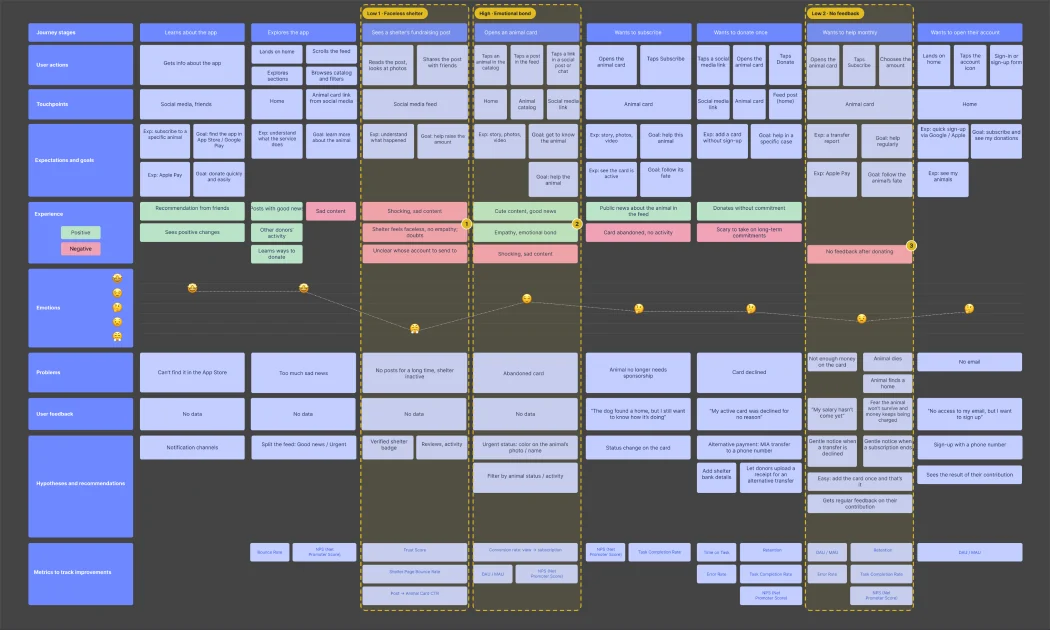
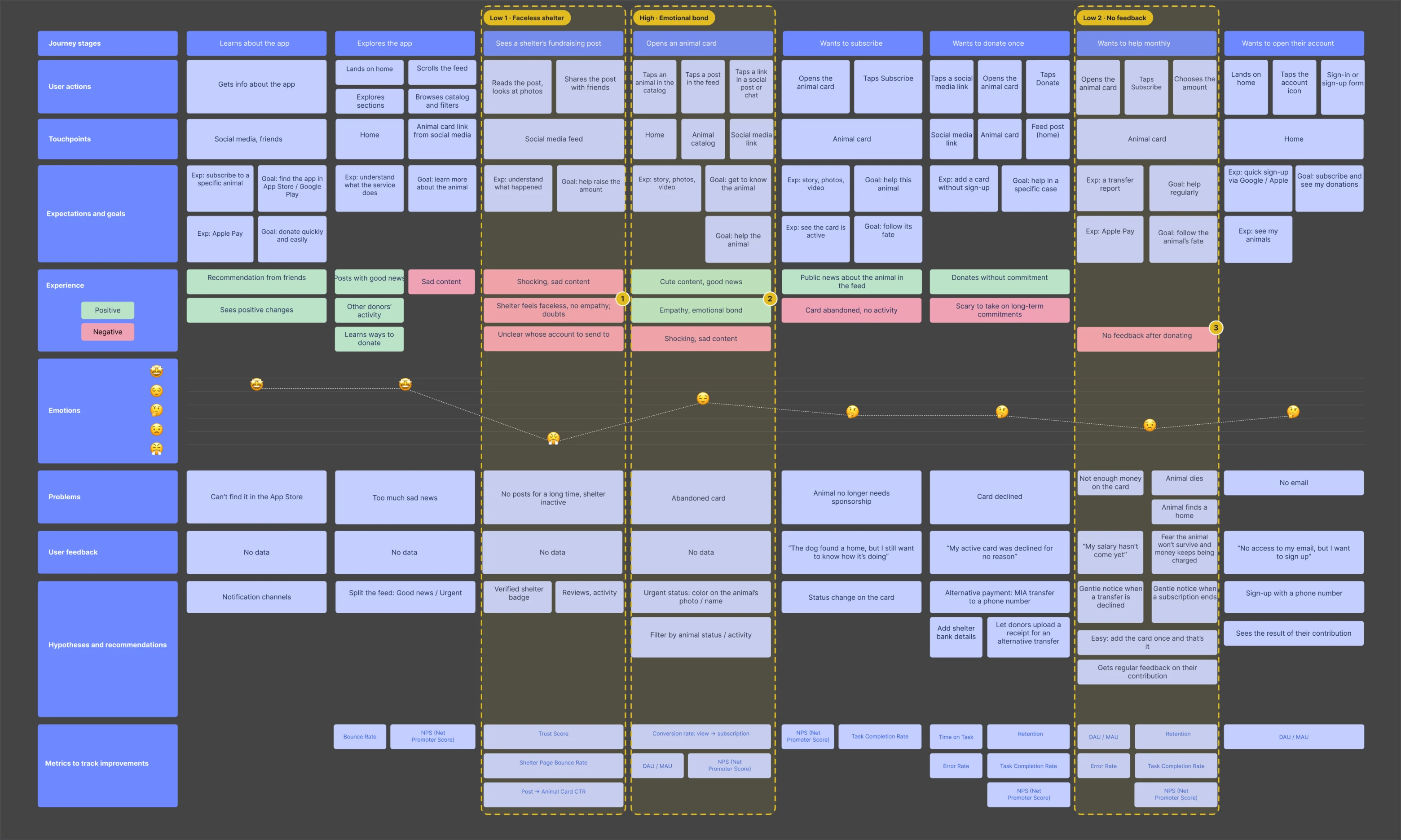
CJM. Mapping the donor’s journey showed two emotional lows and one high to build on.
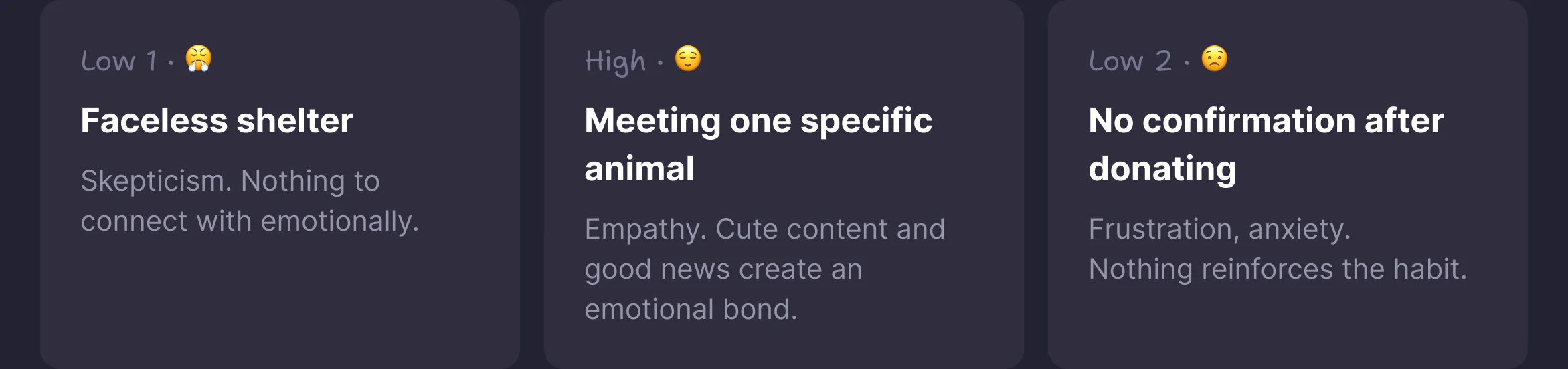
Low 1 · 😤
Faceless shelter
Skepticism. Nothing to connect with emotionally.
High · 😌
Meeting one specific animal
Empathy. Cute content and good news create an emotional bond.
Low 2 · 😟
No confirmation after donating
Frustration, anxiety.
Nothing reinforces the habit.
Competitors. Nobody lets you follow a specific animal, donate in a few taps, and see what happened next.
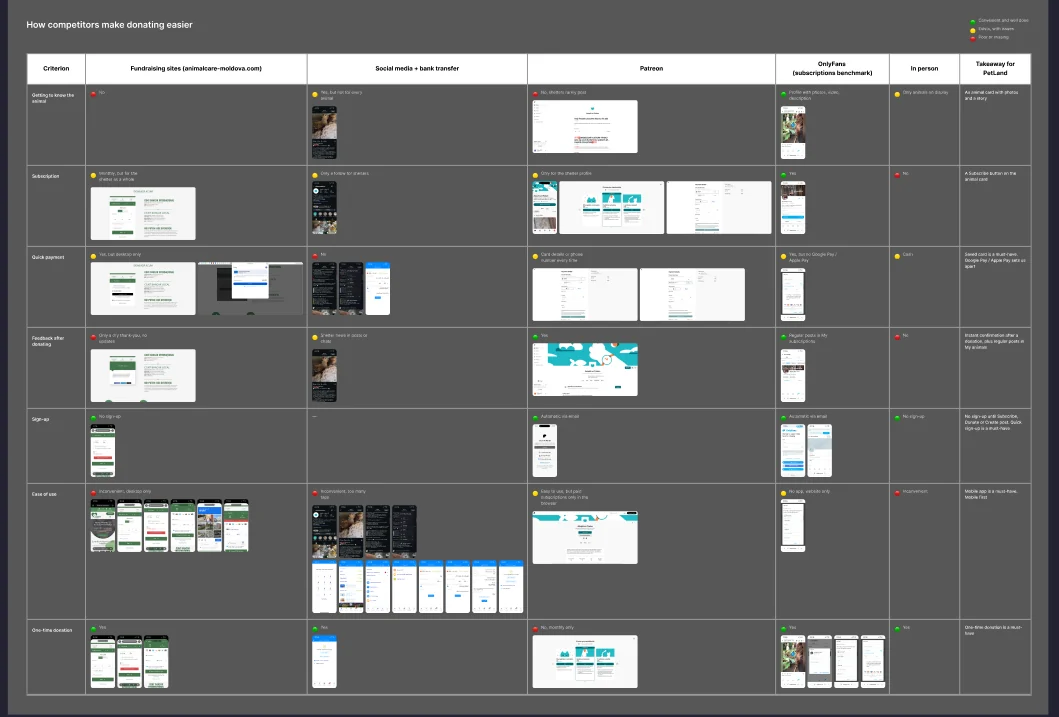
Competitor comparison
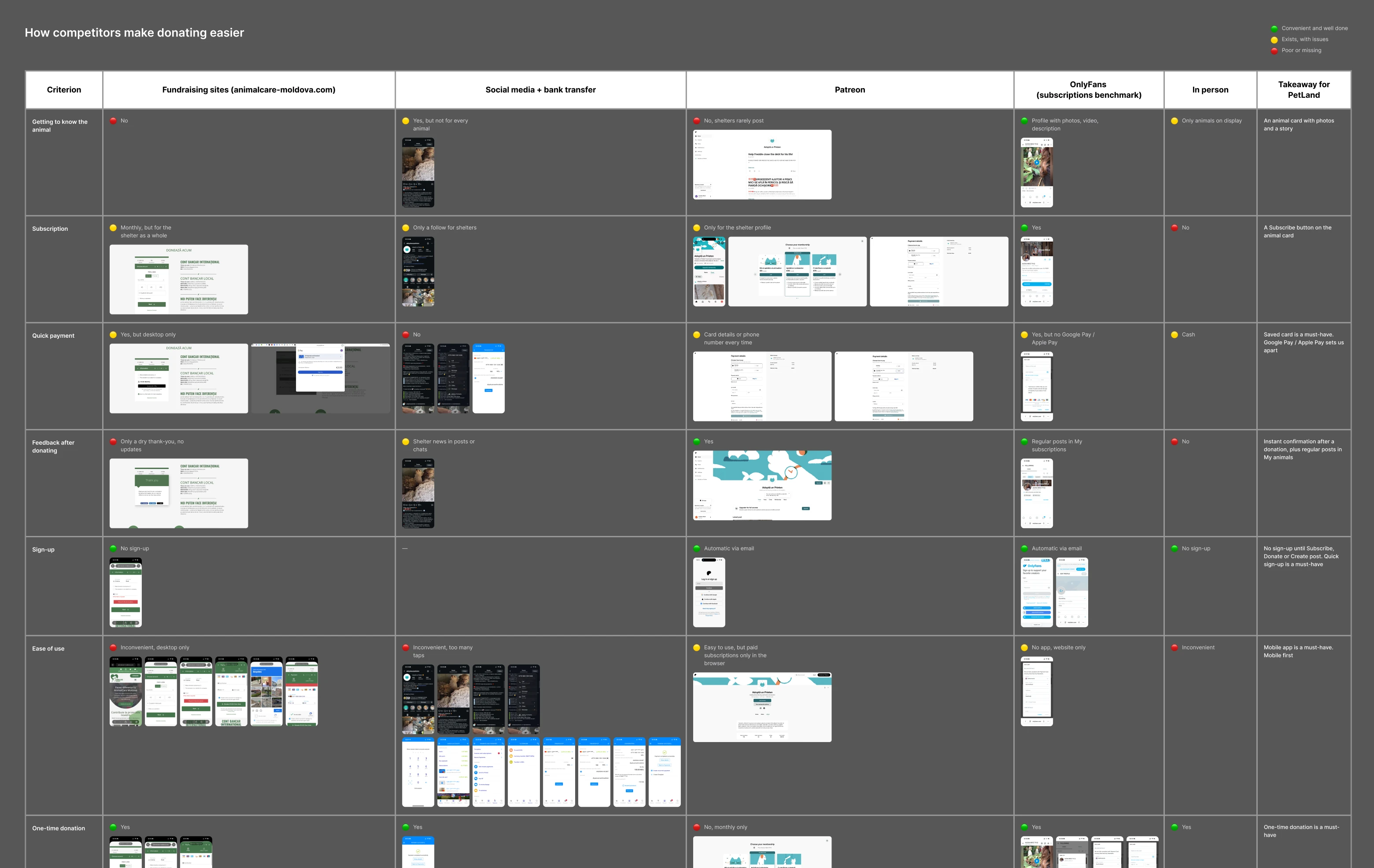
How competitors make donating easier. 🟢 Convenient and well done. 🟡 Exists, with issues. 🔴 Poor or missing.
| Criterion | Fundraising sites (animalcare-moldova.com) | Social media + bank transfer | Patreon | OnlyFans (subscriptions benchmark) | In person | Takeaway for PetLand |
|---|---|---|---|---|---|---|
| Getting to know the animal | Poor or missing. No | Exists, with issues. Yes, but not for every animal | Poor or missing. No, shelters rarely post | Convenient and well done. Profile with photos, video, description | Exists, with issues. Only animals on display | An animal card with photos and a story |
| Subscription | Exists, with issues. Monthly, but for the shelter as a whole | Exists, with issues. Only a follow for shelters | Exists, with issues. Only for the shelter profile | Convenient and well done. Yes | Poor or missing. No | A Subscribe button on the animal card |
| Quick payment | Exists, with issues. Yes, but desktop only | Poor or missing. No | Exists, with issues. Card details or phone number every time | Exists, with issues. Yes, but no Google Pay / Apple Pay | Exists, with issues. Cash | Saved card is a must-have. Google Pay / Apple Pay sets us apart |
| Feedback after donating | Poor or missing. Only a dry thank-you, no updates | Exists, with issues. Shelter news in posts or chats | Convenient and well done. Yes | Convenient and well done. Regular posts in My subscriptions | Poor or missing. No | Instant confirmation after a donation, plus regular posts in My animals |
| Sign-up | Convenient and well done. No sign-up | — | Convenient and well done. Automatic via email | Convenient and well done. Automatic via email | Convenient and well done. No sign-up | No sign-up until Subscribe, Donate or Create post. Quick sign-up is a must-have |
| Ease of use | Poor or missing. Inconvenient, desktop only | Poor or missing. Inconvenient, too many taps | Exists, with issues. Easy to use, but paid subscriptions only in the browser | Exists, with issues. No app, website only | Poor or missing. Inconvenient | Mobile app is a must-have. Mobile first |
| One-time donation | Convenient and well done. Yes | Convenient and well done. Yes | Poor or missing. No, monthly only | Convenient and well done. Yes | Convenient and well done. Yes | One-time donation is a must-have |
Decisions. Animal cards open without sign-up, so nobody has to register just to look. The first donation can be one-time and any amount, with no mandatory subscription. Sponsors and one-time donors both get notifications about what happened with the animal next, so no one ends up sponsoring an abandoned page.
Wireflow. Each hypothesis is measured on the screen where the decision happens.
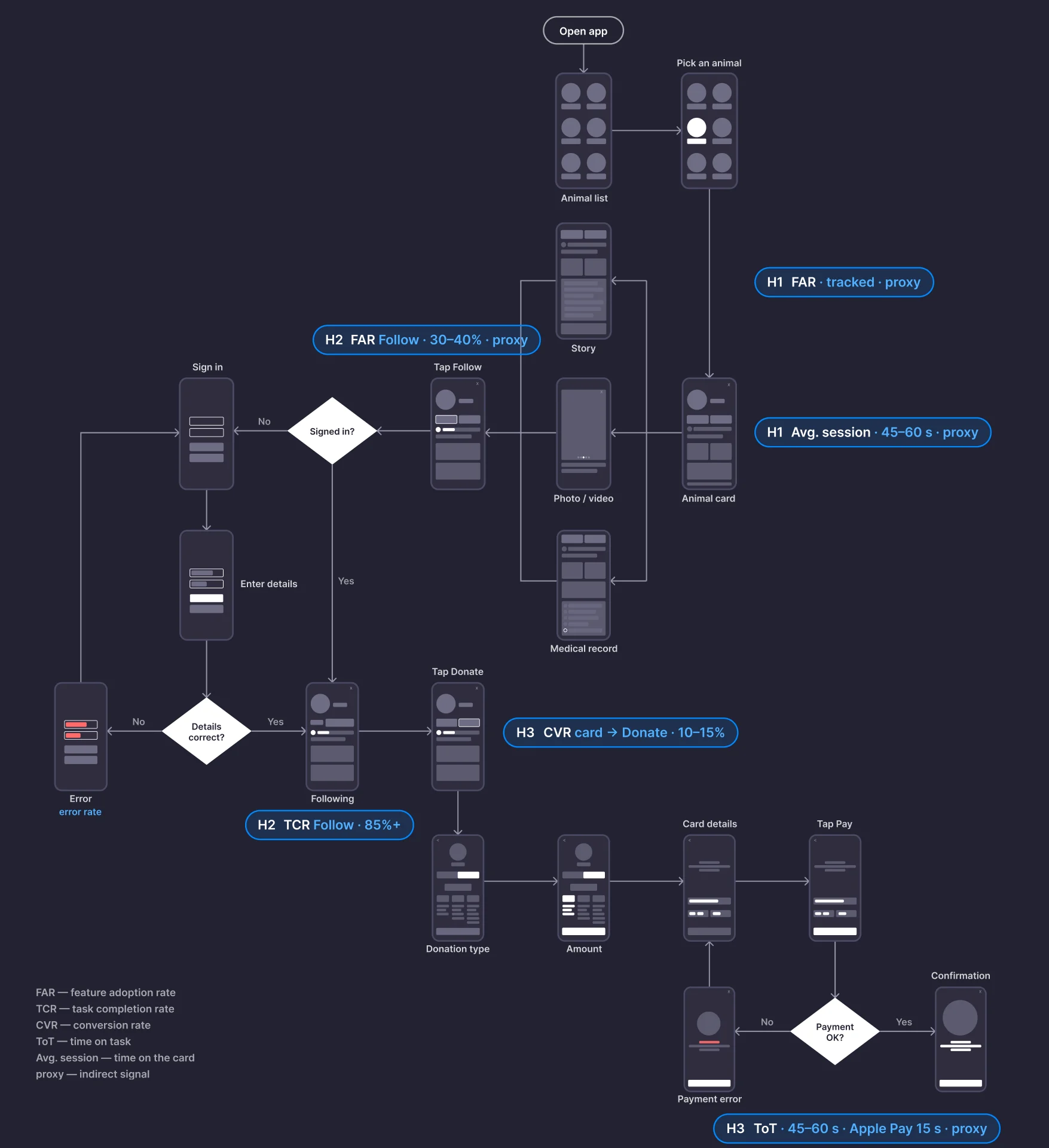
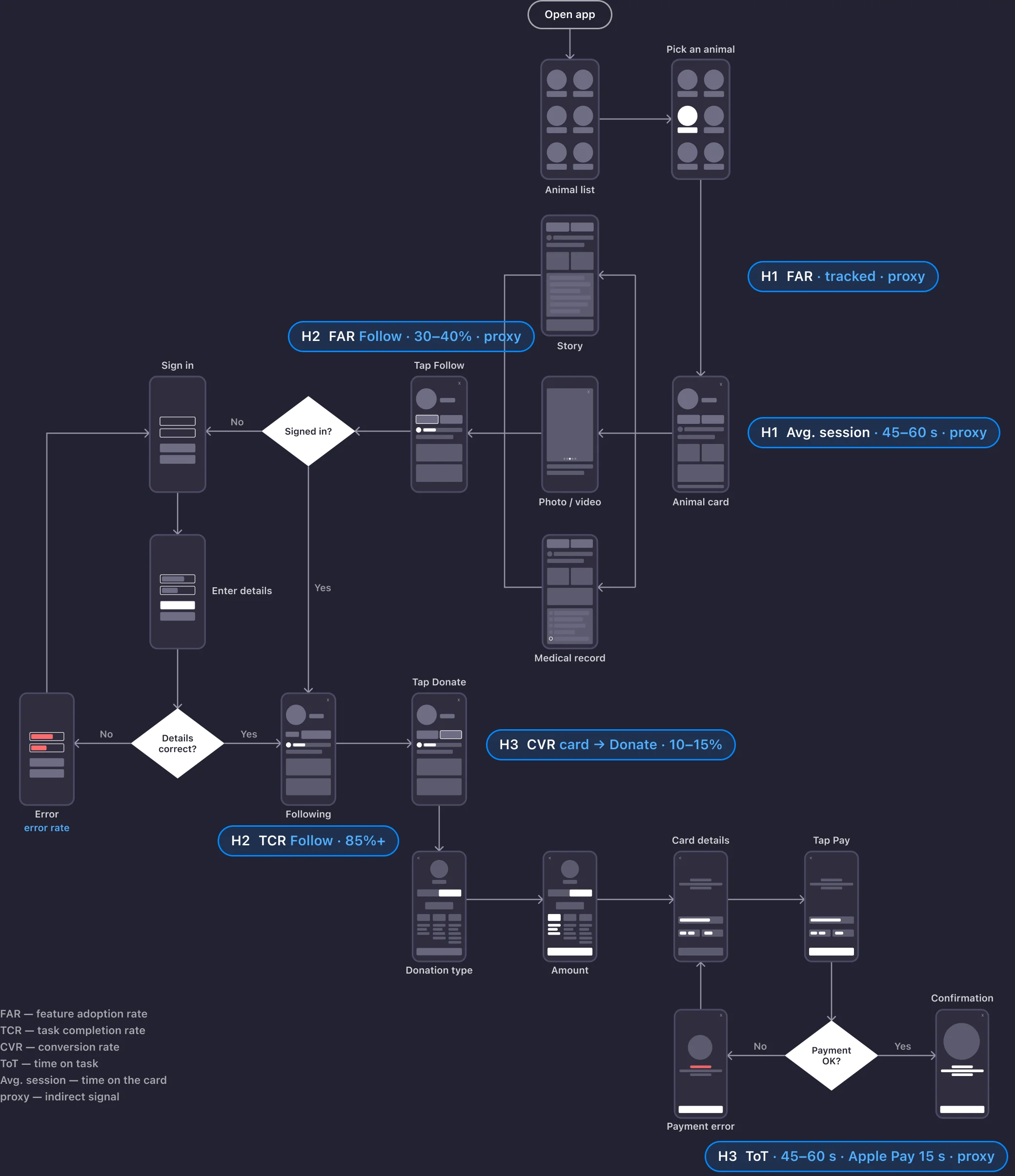
Validation. All the hypothesis held, though not cleanly. What I didn’t expect mattered more: users got lost in navigation, so I prioritized it straight away, along with 4 other critical issues out of the 11 found.

does Junior mean an old one?

this hearts icon looks more like My subscriptions
can I drag it and
fill in the amount?
Looks like a game

saw the buttons right away and tapped

will there be videos here?

would be nice
to have a photo
here
Screen recording · Test #1 in FigJam
test passport · hypotheses · issues list
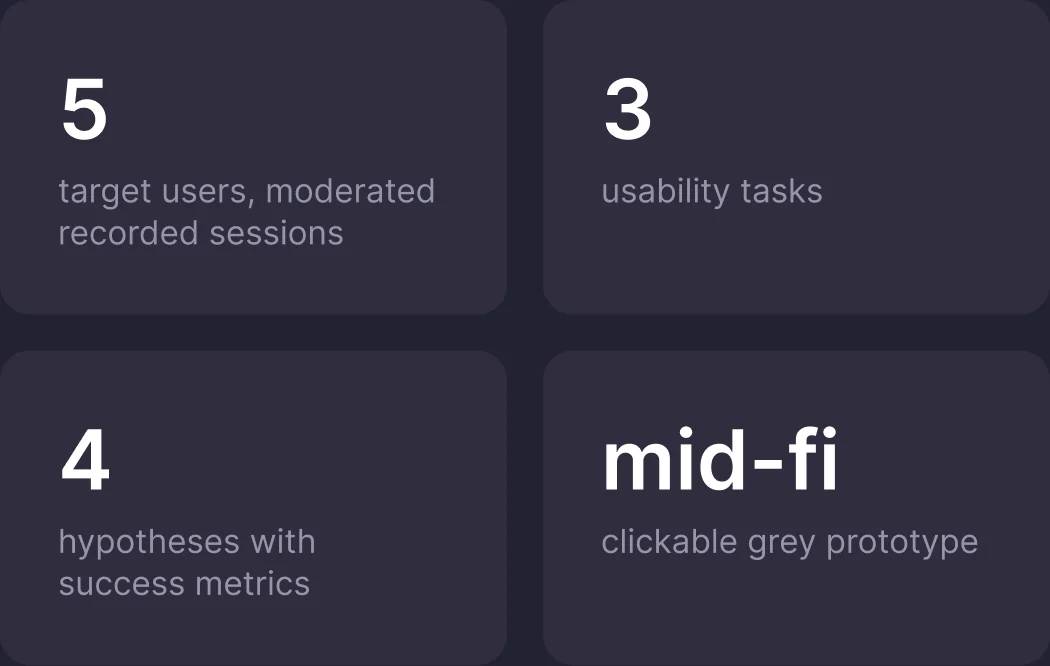
- 5
- target users, moderated recorded sessions
- 3
- usability tasks
- 4
- hypotheses with success metrics
- mid-fi
- clickable grey prototype
Iterations. After the test, I fixed what confused people the most: getting around the app.
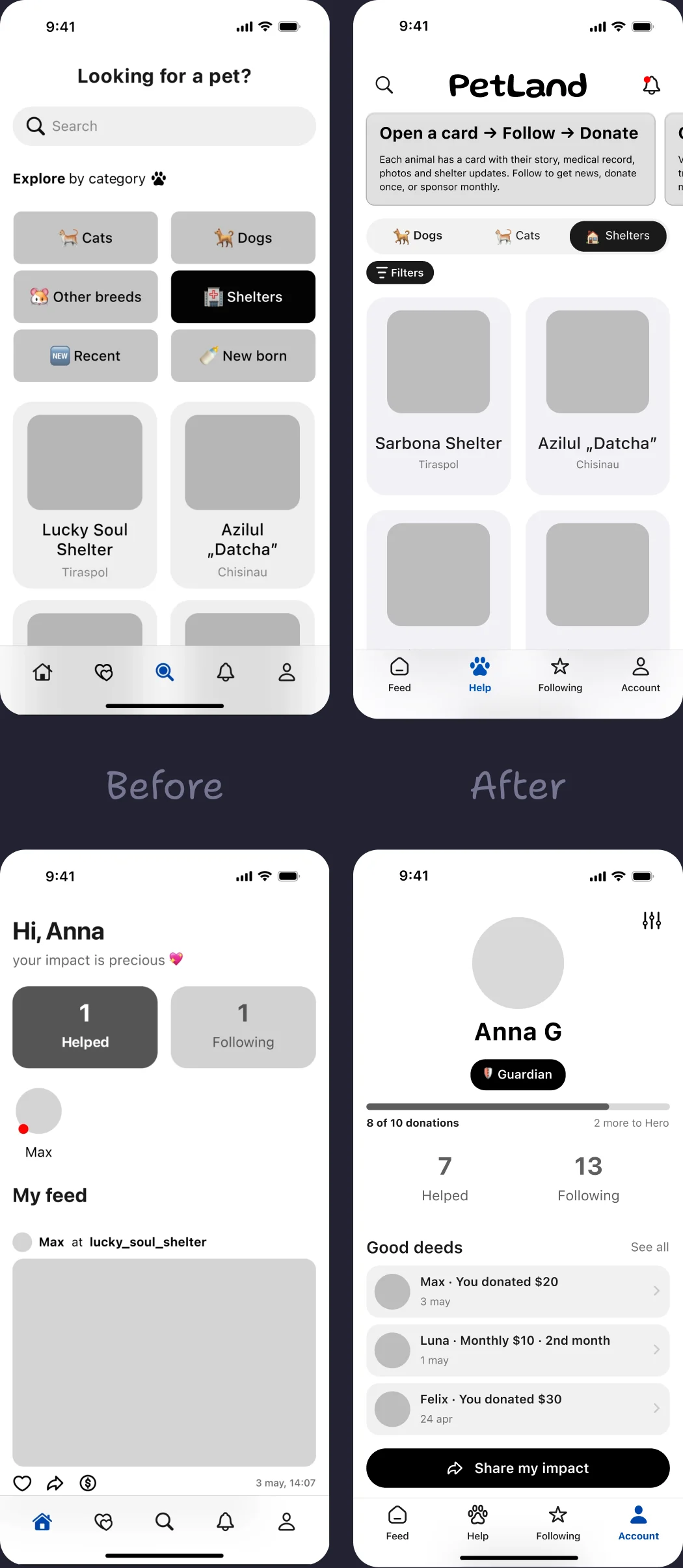
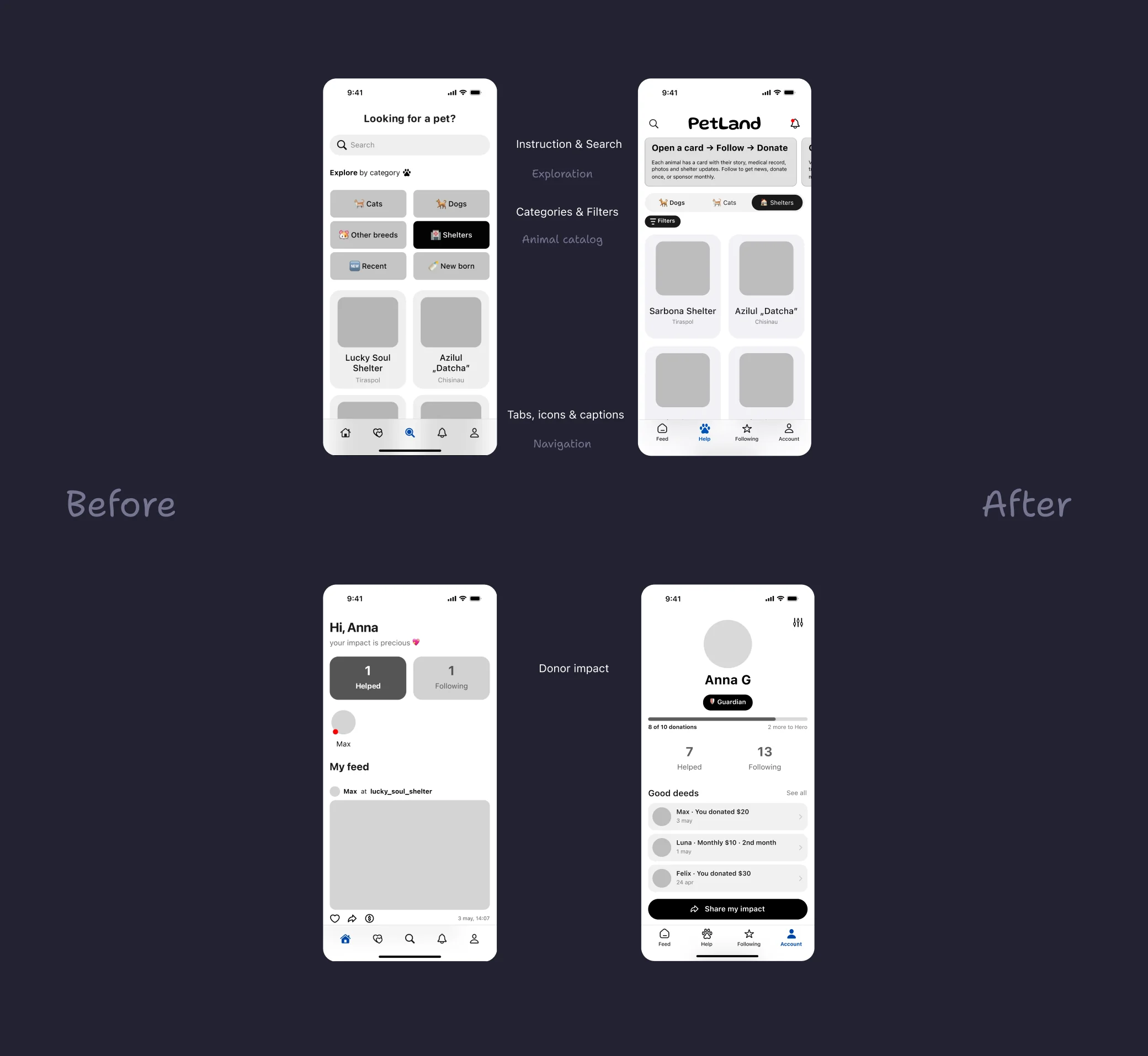
Solution. From meeting an animal to seeing where your money went, in one mobile flow. Each step closes a trust gap found in research.
Discover
Filter by status and needs. Animal cards open without sign-up.
Follow
Free follow as a first step, no money needed to start watching.
Donate
One-time or monthly, tiers set per animal by its needs. Apple Pay and card.
See impact
Receipt, shelter updates, spending reports, progress bar and Impact Page.
Design system
Animation
Results. The core flow passed usability testing and is now moved into development.
Success animation
Thanks. Ask about this project, or read the next case.
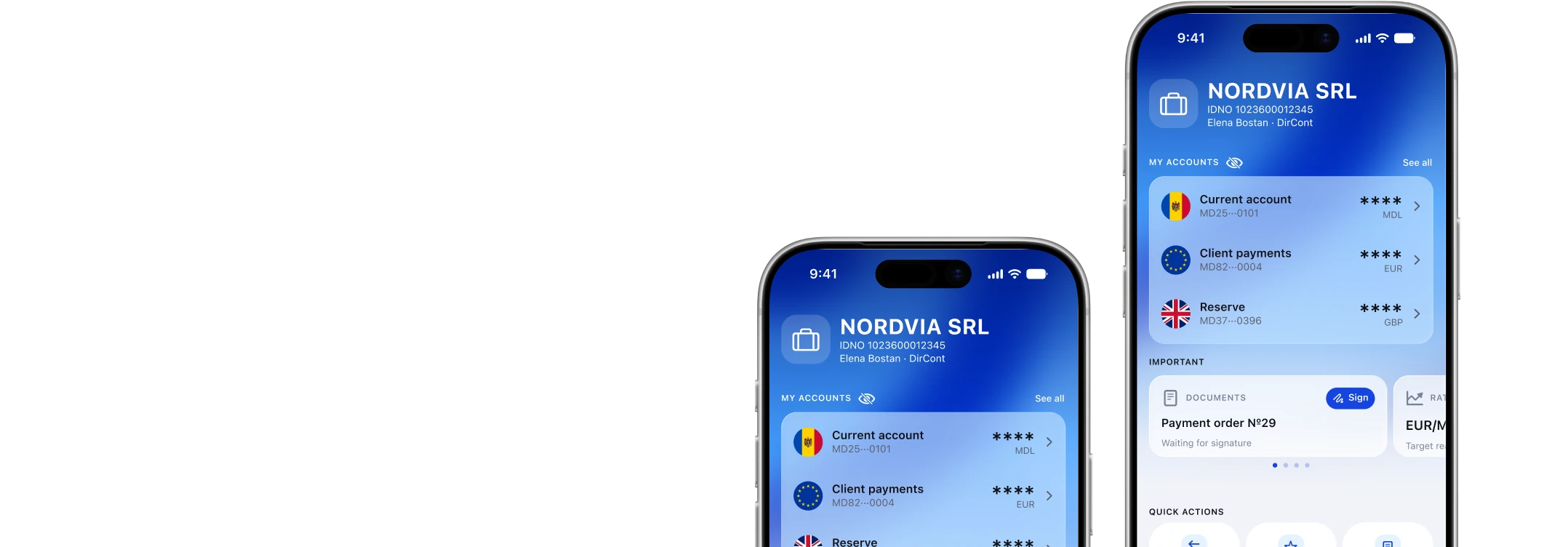
Business owners pay, convert and check rates without opening the desktop platform.
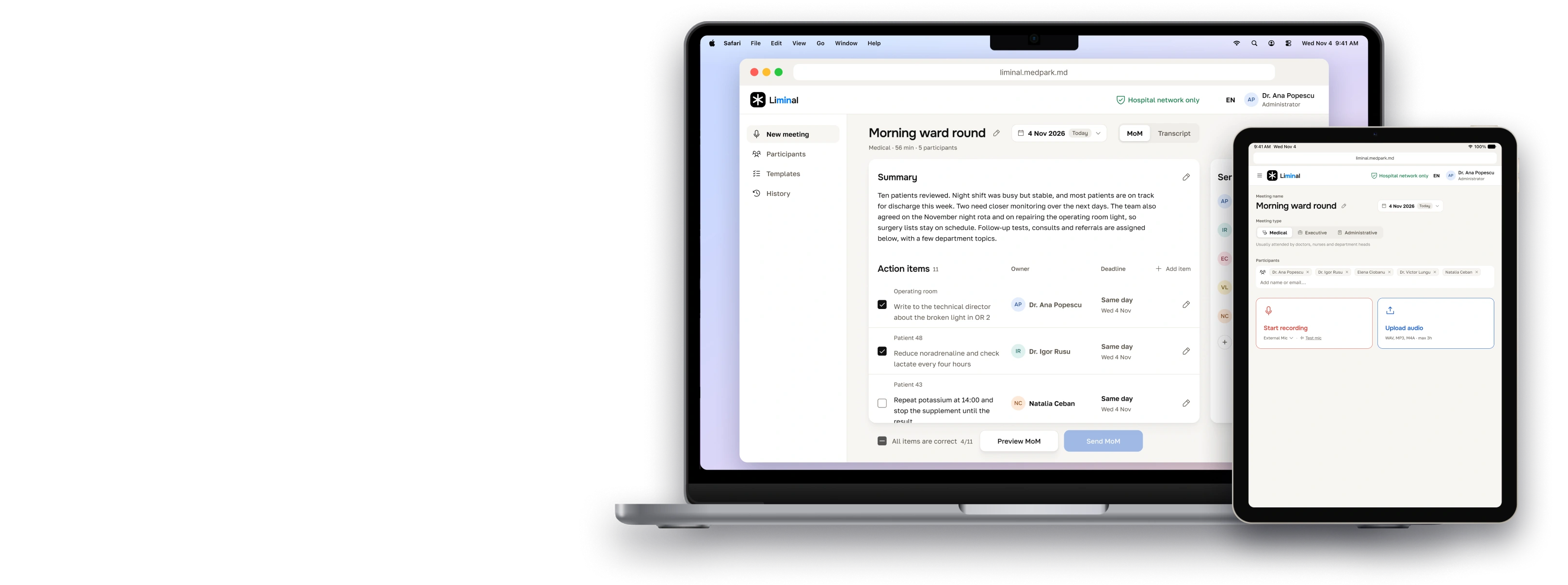
Hospital boards get their minutes by email, and the audio never leaves the network.